7 Powerful Ingredients That can Fade Acne Scars
7 Powerful Ingredients That Can Fade Acne Scars
Originally Posted on March 20, 2021, at 5:51 pm by Crystal
Acne Scars, though they are not painful, unlike the pimples that cause them, their appearance can be heartbreaking and annoying. In this post, you’ll discover 7 powerful, science-backed ingredients proven to fade acne scars, plus product recommendations to help you incorporate them into your skincare routine.
I hereby disclose that if you buy anything from the affiliate links here, we might earn a small commission at no extra cost to you. Thanks.
How can I get rid of Acne Scars?
Or what is the best ingredient for acne scars?
I have seen and heard people ask these questions so many times:
Acne can be a frustrating and irritating condition to deal with. First, you have to battle the painful cyst (Pimples), then the scars left behind the pimple.
These tell the tales of the struggle between you and the stubborn acne.
And sometimes, people take one look at your face, the scars, and the new ones popping up on old scars, and can only imagine the pain.
This is where the balance between managing acne and minimizing the scars it leaves behind lies.
Here, I have made a list of 7 Powerful Ingredients That Can Fade Acne Scars.
- Vitamin C
- Niacinamide
- SPF
- Retinol
- Salicylic Acid
- Azelaic Acid
- Glycolic Acid
All you need to do is include them in your skincare products or look out for them when you are shopping for your beauty products.
Just check the list of ingredients they used in making the beauty or facial products you want to purchase.
Before we dive into the tremendous benefits of these ingredients, let’s look into Acne and Its Causes.
What Causes Acne?
The Pore of the skin is made up of hair (hair follicles) and a sebaceous gland. Acne forms when the pores of your skin become engorged with excess oil, dead skin, or bacteria.
This now leads to inflamed rashes or Pimples. Sometimes, these rashes swell up and result in breakdown of the Follicle walls, causing blemishes on the skin.
If the blemishes are not deep, they might heal quickly. However, if they are deep, the bacteria spread, creating deeper blemishes.
As the tissue in the affected areas heals, excess melanin is produced, causing a darker appearance than your regular complexion.
What Ingredients Can Face Acne Scars?
Below, I explained the 7 Powerful Ingredients That Can Fade Acne Scars.
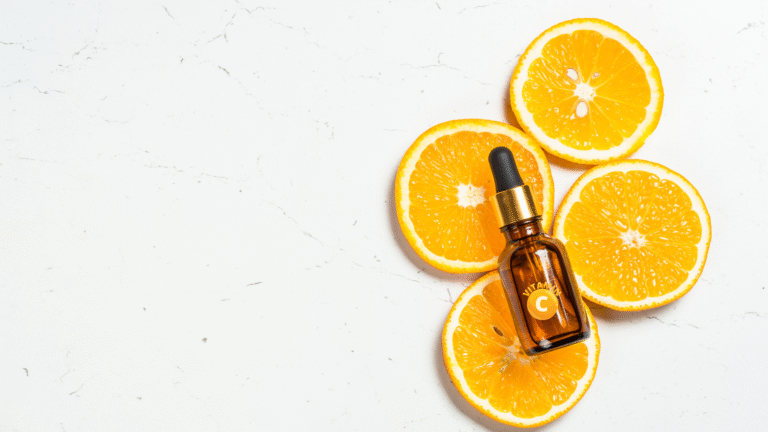
1. Vitamin C:

Buy on Amazon
This is my favorite ingredient for achieving a smooth, even, and glowing skin tone. And the best part is that it is safe for most skin types.
Vitamin C can help increase collagen synthesis, resulting in healthier-looking skin.
It is the best and safest ingredient for fading scars, uneven skin tones, reducing fine lines, and addressing pigmentation, dark spots, or any other complexion concern.
It can help brighten and even skin tone; therefore, it is excellent for fading acne scars.
It can help reduce redness and fade pigmentation, minimizing redness and creating a brighter complexion for acne-prone skin.
Vitamin C inhibits melanin production – this can help fade dark spots and scars left behind by acne, as melanin is responsible for the darkening of injured or damaged skin.
It also helps boost wound healing. This would reduce the risk of inflammation, infection, and scarring in acne-prone skin.
Vitamin C, Hydroxy acid, and azelaic acid are especially beneficial for reducing the appearance of dark acne scars. Look for them in your beauty products.
2. Niacinamide:
Also known as Nicotinamide. This is a form of Vitamin B3, a nutrient essential for the body, particularly for our skin.
It is an excellent ingredient for brightening the skin.
It prevents signs of ageing, redness from acne, and strengthens the skin barrier.
When it comes to our skin, we can’t overlook its importance, especially in the treatment of certain skin conditions such as pigmentation, wrinkles, acne, excess oil, large pores, dryness, and redness. Think of Niacinamide.
It can help the skin lock in moisture to prevent environmental damage.
Minimises redness from acne, blotchiness, and other inflammatory skin conditions.
Your pores become tighter and your skin smoother.
Niacinamide can also protect the skin from damage and repair damage caused by ultraviolet rays.
Niacinamide can help fade dark spots and pigmentation, while also lightening them. Additionally, it can be used to treat acne, as it regulates oil production in the skin. Here are some of the best Niacinamide products you can try:

3. SPF:
SPF is an abbreviation for Sun Protection Factor. Sun Protection is essential in our daily skincare routine.
All skin tones and types need it. You cannot do without sunscreen. You can read more on why you need it here (Why You Need To Add Sunscreen To Your Skincare Routine), in case you are wondering.
It is best to apply sunscreen 30 minutes before going into the sun. And I know you might also be wondering what sunscreen has to do with acne or how it can help you minimize or fade acne scars.
Sunscreen will prevent acne scars from darkening. Sunrays can make post-acne scars get worse.
Therefore, incorporating sun protection into your beauty routine can help prevent this.
Use a lightweight sunscreen, one that does not clog pores. We don’t want the prevention to create a bigger problem.
So shop for a sunscreen that won’t clog pores and lead to more breakouts.
4. Retinol:
This is mainly used to treat:
- Acne
- Large Pores caused by acne
- Oily Skin
- Collagen Loss
- Fine lines
- Wrinkles
- Sunspots
- Uneven Skin Tones and
- Hyperpigmentation
Retinol helps increase the body’s collagen levels. This helps to plump out the skin, thereby reducing the appearance of fine lines and wrinkles.
It eliminates and reduces signs of aging by improving the skin texture; in other words, retinol gives us flawless-looking skin.
So, how does retinol help fade acne scars or help acne-prone skin?
It helps to keep the pores of the skin unclogged by creating comedolytic agents to help prevent the formation of comedones.
Then it balances the skin’s hydrating level and greatly helps with exfoliation. This, in turn, controls the excess production of sebum in the pores.
5. Salicylic Acid:
Salicylic Acid belongs to a class of beta-hydroxy acids. They are mainly famous for cleansing and purifying pores. I will call them a significant weapon for battling breakouts.
This is due to their ability to penetrate the skin. Once they do this, they dissolve skin debris that clogs pores and also reduces swelling.
Salicylic acid can also fade blemishes, including acne scars, by cleaning and or purging the dirt in the pores, reducing redness and swelling in the affected areas.
It is an excellent ingredient for acne-prone skin and is also effective for fading scars.
6. Azelaic Acid:
Azelaic Acid fights acne, lightens dark spots, and removes dead skin cells. It can block the production of pigment in the skin, which helps prevent scars from darkening.
This is possible because azelaic acid contains antimicrobial and anti-inflammatory properties. This makes it particularly effective in treating acne.
The acid in it cleanses the bacteria from the infected pores responsible for acne and also prevents future outbreaks. It reduces inflammation, so the acne (pimple)is less red and irritated. Azelaic acid is great for anyone with acne-prone skin and hyperpigmentation.
7. Glycolic Acid:
Glycolic Acid is a gentle exfoliator, which I believe makes it perfect for acne-prone skin.
Although it does more than treat acne, it can also be used to treat Hyperpigmentation, Aging, Wrinkles, Fine lines, and other conditions.
It is an AHA (Alpha-Hydroxy Acid) that enhances the skin’s luminosity. This is mainly because it is an exfoliator.
It exfoliates the outermost layer of dead skin, revealing newer, healthier skin that appears more radiant and even.
Glycolic Acid treats wrinkles, hyperpigmentation, and, of course, acne-prone skin. It can also prevent most acne, like blackheads, whiteheads, and pimples.
However, if you have sensitive skin and are prone to irritation, you need to introduce glycolic Acid to your skin slowly. You may want to consider using it every other day initially.
Moreover, it can make you sensitive to the sun, like all AHA products, so it is recommended to use sunscreen in conjunction with it.
What has helped you with acne or any other skin-related issues? Add your response in the comment section. Someone might find something useful to help them as well.
Spread the love by sharing this post, and don’t forget to sign up for my newsletter to stay updated.